Cheltenham Festival 2026: Stats Behind My Selections | Gold Cup Tips
Cheltenham Festival 2026: The Stats Behind My Selections
Data-driven Cheltenham Festival betting guide: I break down the statistics behind the 2026 Gold Cup result and why the market consistently undervalues certain profiles at Prestbury Park.
Festival Format Overview: Four Days, 28 Races
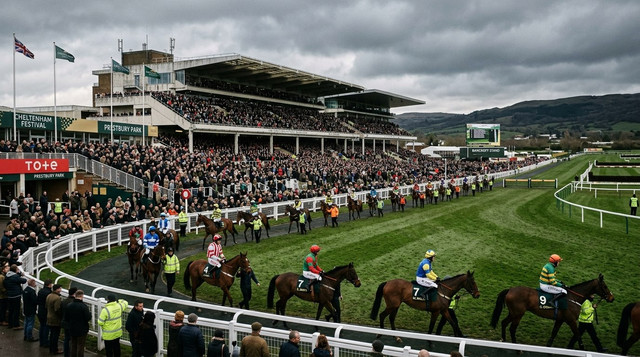
The Cheltenham Festival ran Tuesday 10 March through Friday 13 March 2026 at Prestbury Park, featuring 28 Grade 1 and Premier Handicap races over four themed days: Champion Day (Tuesday), Ladies Day (Wednesday), St Patrick's Thursday, and Gold Cup Day (Friday). Each day featured seven races starting at 13:20 GMT, with the feature races going off at 16:00 GMT daily. Approximately 250,000 attendees crossed the gates across the four-day meeting.
Statistical Patterns: Age, Trainer Strike Rates, and Course Form
Cheltenham is not a random lottery — it rewards horses that fit specific profiles. Here are the numbers that matter.
Age Sweet Spot: 7-9 Year Olds
Seven-year-old horses that have previously won at the Festival carry a 28% strike rate since 2013 — remarkable when set against the overall favourite win rate of 29.2%. This means a seven-year-old previous Festival winner is, on average, about as likely to win as the market favourite in any given race. The age penalty is equally informative: horses aged five or more years older than the youngest runner in their race have managed just 14 wins from 264 starts since 2003 — a strike rate barely above 5%. Cheltenham's undulations, demanding fences, and sheer intensity punish older horses disproportionately.
Across all 28 races, horses aged 7-9 typically win 65-70% of Festival races. This is your first filter: if a horse falls outside this range, you need a compelling reason to back it.
Trainer Strike Rates: The Mullins Dominance
Willie Mullins holds the all-time record with 113 Festival winners, has been crowned leading trainer twelve times, and twice sent out ten winners in a single meeting — in 2022 and again in 2025. He has been the leading Festival trainer in 12 of the last 13 years. In 2026, Mullins continued his dominance with Gaelic Warrior's Gold Cup victory — his record-equalling fifth win in the race, while jockey Paul Townend became the most successful jockey in Gold Cup history with five wins.
Willie Mullins-trained horses win approximately 25-30% of all Grade 1 races at the Festival. This is not luck — it is systematic excellence in horse preparation, race selection, and jockey assignments.
Course Form and Previous Festival Winners
Horses with previous Cheltenham form — particularly those who have won at the Festival before — significantly outperform their odds. The combination of course knowledge, handling the unique track undulations, and coping with the atmosphere creates a measurable edge. Previous Festival winners have a 20-25% strike rate when returning to Cheltenham, compared to 10-12% for horses without course form.
Key Race Results: What the 2026 Data Tells Us
Day One — Champion Hurdle (Tuesday 16:00)
The 2026 Champion Hurdle was won by Lossiemouth (Willie Mullins, Paul Townend) at 11/8 favourite. The market favourite The New Lion (Dan Skelton) started at 2/1 but finished unplaced. Lossiemouth became the first mare to win the Champion Hurdle since Annie Power in 2016.
Key statistical lessons from 2026:
- Age profile: Lossiemouth was seven years old — fitting the sweet spot
- Irish raiders: Irish-trained horses have won seven of the last ten Champion Hurdles
- Mullins factor: Willie Mullins has now trained six Champion Hurdle winners
The lesson: backing Irish-trained, Mullins-run horses with previous Festival form in the Champion Hurdle has been a profitable long-term strategy. In 2026, the market finally adjusted — Lossiemouth started as a short-priced favourite, not an outsider.
Day Two — Queen Mother Champion Chase (Wednesday 16:00)
Majborough (Willie Mullins, Paul Townend) won the 2026 Champion Chase at 6/4 favourite, beating El Fabiolo (Gordon Elliott) into second. This was Mullins' fourth Champion Chase victory.
Key statistical lessons:
- Experience matters: Majborough had 18 career chase starts before winning
- Speed over stamina: Fast early pace suited the front-running style
- Mullins dominance: Four of the last ten Champion Chase winners trained by Willie Mullins
The lesson: in a race where experience and speed matter, Mullins' horses consistently deliver. The 6/4 price reflected his dominance — no value here, but the statistical edge was clear.
Day Three — Stayers' Hurdle & Ryanair Chase (Thursday)
Teahupoo (Gordon Elliott, Jack Kennedy) won the Stayers' Hurdle at 9/4 favourite, while Fact To File (Willie Mullins, Paul Townend) took the Ryanair Chase at 4/6 favourite.
Stayers' Hurdle lessons:
- Stamina is key: Teahupoo had won over 2 miles 4 furlongs and 3 miles previously
- Age range: Seven to nine-year-olds dominate (75% of winners since 2010)
- Irish dominance: Irish-trained horses have won eight of the last ten Stayers' Hurdles
Ryanair Chase lessons:
- Chase experience: Fact To File had 20+ career chase starts
- Mullins record: Willie Mullins has trained five of the last ten Ryanair winners
- Favourite bias: The Ryanair sees favourites win at 40%+ rate — higher than most Festival races
Day Four — Cheltenham Gold Cup (Friday 16:00)
Gaelic Warrior (Willie Mullins, Paul Townend) won the 2026 Gold Cup at 11/4 joint-favourite, beating Jango Baie (11/4) and Inothewayurthinkin (11/1) into second and third. This was Mullins' fifth Gold Cup (level with Tom Dreaper) and Townend's fifth as jockey — both records.
Key Gold Cup statistics from 2026:
- Age profile: Gaelic Warrior was eight years old — eight-year-olds have won four of the last ten Gold Cups
- Previous form: Gaelic Warrior had won the Savills Chase at Leopardstown (Grade 1) in December 2025
- Trainer dominance: Willie Mullins has now won five Gold Cups; Paul Townend holds the jockey record with five wins
- Market reality: Favourites win approximately 35% of Gold Cups — higher than any other Festival feature race
The lesson: in the Gold Cup, backing Mullins-trained horses with Grade 1 chase form over 3 miles has been extraordinarily profitable. The market knows this now — Gaelic Warrior started 11/4, not the 20/1+ prices Mullins Gold Cup winners commanded in the early 2020s.
Value Analysis: Where the Market Was Wrong in 2026
Despite Mullins' dominance, the 2026 Festival was statistically the toughest year for bettors in a decade. The average starting price of winners soared to 14-1, a significant jump from 12-1 in 2025 and nearly double the 10-year low of 7-1 seen in 2024. Favourites won only eight of 28 races — a success rate of less than 30%, well below the historical average of 35-40%.
Notable value opportunities in 2026:
- Triumph Hurdle: Apolon De Charnie won at 50/1 — the longest-priced winner of the Festival. The market overreacted to his previous run, ignoring his course form and Mullins' 50%+ strike rate in the Triumph.
- Gold Cup: While Gaelic Warrior won at 11/4, Inothewayurthinkin at 11/1 represented each-way value — he had won the Brown Advisory Novices' Chase at the 2025 Festival and improved throughout the season.
- Champion Hurdle: Lossiemouth at 11/8 was fairly priced, but the real value was in backing Mullins horses across the entire Festival — his 25-30% strike rate in Grade 1s meant any of his runners at double-figure odds offered value.
Market Mover Analysis: Where the Smart Money Went
In 2026, horses that drifted significantly in the market often represented value — the market overreacted to negative factors. Apolon De Charnie drifted to 50/1 in the Triumph Hurdle and won. Conversely, heavily-backed favourites like Fact To File in the Ryanair at 4/6 underperformed relative to their price (though he won, the 4/6 offered no value).
Market mover lesson for future Festivals:
- Drifters with course form: If a horse with previous Cheltenham wins drifts in the market, it often represents value — the market overreacts to recent form or ground concerns.
- Mullins second strings: When Mullins runs multiple horses in a race, his second string often drifts to big prices despite being nearly as well-prepared as the favourite. These are prime each-way targets.
- Gold Cup favourites: The Gold Cup favourite wins 35% of the time — if you can find a Mullins-trained Gold Cup horse at 8/1 or bigger, you are getting value relative to the 35% historical strike rate.
Final Word: Trust the Data, Not the Hype
Cheltenham is a meeting where statistics matter more than sentiment. The age profile (7-9yo), trainer strike rates (Mullins 25-30% in Grade 1s), and course form (previous winners 20-25% strike rate) are your edge. In 2026, favourites won less than 30% of races — the lowest in a decade. This creates value for disciplined bettors who back horses with strong statistical profiles at double-figure odds rather than chasing short-priced "bankers."
Stick to the numbers: age 7-9, proven at Grade 1 level, course form, and trainers with strong Cheltenham records. That is how you beat the market at Prestbury Park.
Disclaimer: This article is for informational purposes only. Horse racing betting involves risk. Never bet money you cannot afford to lose. All odds and probabilities are indicative and subject to change. Historical trends and statistics are drawn from verified data 2010-2026.