Laying Horses on the Exchange: When and Why to Bet Against a Selection
Laying Horses on the Exchange: When and Why to Bet Against a Selection
Lay betting lets you bet against a horse winning. Here's when that edge exists — and the catastrophic mistakes beginners make with liability.
What Lay Betting Means on an Exchange
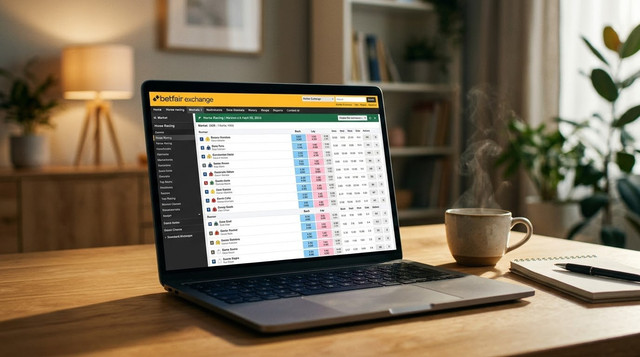
Traditional betting means backing a selection to win. Lay betting is the opposite — you are betting that a selection will NOT win. On betting exchanges like Betfair, you can act as the bookmaker, offering odds to other bettors.
How It Works
- Backing: You bet that a horse WILL win. If it wins, you profit based on the odds.
- Laying: You bet that a horse will NOT win. If it loses (any other horse wins), you profit based on the odds you laid.
On an exchange, when you lay a horse, you are accepting bets from other users who think that horse will win. If the horse loses, you keep their stakes. If the horse wins, you pay out based on the odds you laid.
Why Lay Betting Exists
Exchanges like Betfair allow peer-to-peer betting — bettors bet against each other rather than against a bookmaker. This creates opportunities to:
- Bet against overhyped favourites — If you believe a favourite is overpriced, lay it
- Trade positions — Back a horse at high odds, then lay it at lower odds for a guaranteed profit (trading)
- Hedge positions — If you have a large back bet, lay part of it to lock in profit or reduce risk
- Arbitrage opportunities — Occasionally, exchange odds differ from bookmaker odds, creating risk-free profit
Liability Explained with Real Worked Example
Liability is the amount you stand to lose if your lay bet loses (i.e., if the horse you laid wins). It is the exchange equivalent of a bookmaker's exposure.
Liability Formula
Formula: Liability = (Backer's Stake × (Decimal Odds - 1))
Or equivalently:
Formula: Liability = (Your Potential Profit / (Decimal Odds - 1))
Worked Example: Laying at 4.0 with £10 Liability
- Decimal odds: 4.0
- Your liability: £10 (this is what you stand to lose if the horse wins)
- Backer's stake you can accept: £10 / (4.0 - 1) = £10 / 3 = £3.33
- Your potential profit if horse loses: £3.33 (the backer's stake)
Interpretation: You are laying a horse at 4.0 (3/1 fractional). You accept a £3.33 bet from another user. If the horse loses, you keep the £3.33. If the horse wins, you pay out £10 (your liability).
Risk-reward ratio: You risk £10 to win £3.33 — you need the horse to lose 75% of the time just to break even. This is why laying short-priced favourites is risky.
Worked Example: Laying at 10.0 with £10 Liability
- Decimal odds: 10.0
- Your liability: £10
- Backer's stake you can accept: £10 / (10.0 - 1) = £10 / 9 = £1.11
- Your potential profit if horse loses: £1.11
Interpretation: You are laying a horse at 10.0 (9/1 fractional). You accept a £1.11 bet. If the horse loses, you keep £1.11. If it wins, you pay £10.
Risk-reward ratio: You risk £10 to win £1.11 — you need the horse to lose 90% of the time just to break even. Laying longshots is extremely risky.
Worked Example: Laying at 2.0 with £10 Liability
- Decimal odds: 2.0 (Evens)
- Your liability: £10
- Backer's stake you can accept: £10 / (2.0 - 1) = £10 / 1 = £10
- Your potential profit if horse loses: £10
Interpretation: You are laying a horse at 2.0 (Evens). You accept a £10 bet. If the horse loses, you keep £10. If it wins, you pay £10.
Risk-reward ratio: You risk £10 to win £10 — even money. You need the horse to lose 50% of the time to break even.
Key Insight: Liability Grows with Odds
The higher the odds you lay, the larger your liability relative to your potential profit. Laying at 2.0 risks £10 to win £10 (1:1 ratio). Laying at 10.0 risks £10 to win £1.11 (9:1 ratio against you). This is why laying favourites (low odds) is safer than laying outsiders (high odds).
When Laying Makes Sense: Favourites in Weak Fields, News Not in Price
Lay betting is not for every race. It makes sense in specific scenarios where you have an edge.
Scenario 1: Favourites in Weak Fields
If a favourite is heavily backed but the field is weak (few credible challengers), the favourite's odds may be too short. Laying it can be profitable if you believe another horse has a genuine chance.
Example: A favourite at 1.50 (1/2) in a 6-runner race where two other horses have strong recent form. If you believe the favourite's true win probability is only 55% (not the 66.7% implied by 1.50), laying it offers value.
Scenario 2: News Not Yet in the Price
If you have information the market has not priced in — a late jockey change, a going change, or a stablemate scratch — laying the favourite can be profitable before the market adjusts.
Example: A favourite is 2.50 but you learn 30 minutes before the race that the going has turned heavy, which does not suit the favourite. If you lay it before the market adjusts, you capture value.
Scenario 3: Overhyped Favourites
Some favourites are overbet due to media hype or big-name trainers. If you believe the hype is unjustified, laying the favourite can be profitable.
Example: A horse from a famous stable is 2.00 but has never won at this course or distance. If you believe its true win probability is 40% (not the 50% implied by 2.00), laying it offers value.
Scenario 4: Trading Positions
If you back a horse at high odds (e.g., 10.0) and it drifts in the market to 5.0, you can lay it at 5.0 to lock in a profit regardless of the outcome.
Example: You back a horse at 10.0 with £10 (potential profit £90). The horse drifts to 5.0. You lay it at 5.0 with £18 liability. If the horse wins, you win £90 from the back bet but lose £18 from the lay = £72 profit. If the horse loses, you lose £10 from the back bet but win £18 from the lay = £8 profit. Either way, you profit.
Common Lay Mistakes: Chasing, No Stop-Loss
Lay betting is riskier than backing because your liability can exceed your potential profit. Beginners often make catastrophic mistakes.
Mistake 1: Chasing Losses
If you lay a horse and it wins, do not immediately lay another horse to "win back" your loss. This is chasing — it leads to escalating liability and potential account blowups.
Rule: Set a daily loss limit (e.g., 5% of bankroll) and stop if you hit it. Do not chase.
Mistake 2: No Stop-Loss
Laying without a stop-loss is dangerous. If you lay a horse at 10.0 and it wins, you lose 9x your potential profit. Without a stop-loss, one bad lay can wipe out weeks of profits.
Rule: Set a maximum liability per lay bet (e.g., 2% of bankroll). Never exceed it.
Mistake 3: Laying Longshots
Laying horses at 10.0+ is extremely risky. Your liability is 9x your potential profit. One winner wipes out nine losing lays.
Rule: Only lay horses at 4.0 or shorter. The risk-reward is more manageable.
Mistake 4: Laying Without Research
Laying is not a shortcut to profit. You must have a genuine reason to believe the horse will lose — weak form, unsuitable going, or overhyped market. Laying without research is just gambling.
Rule: Only lay horses where you have a specific, research-backed reason to believe they will lose.
Mistake 5: Ignoring Exchange Fees
Exchanges charge commission on net winnings (typically 2-5%). This eats into your profit. Factor commission into your ROI calculations.
Rule: Calculate your net profit after commission. A 5% gross profit becomes 4.75% net after 5% commission.
Basic Lay Strategy for Beginners
If you are new to lay betting, start cautiously. Here is a basic strategy.
Step 1: Start with Small Liability
Begin with liability of 1-2% of your bankroll per lay bet. If your bankroll is £500, that means £5-£10 liability per lay. This limits damage from mistakes.
Step 2: Only Lay Favourites (2.0-4.0 Odds)
Focus on laying favourites in the 2.0-4.0 odds range. The risk-reward is more manageable than laying longshots.
Step 3: Have a Specific Reason
Only lay a horse if you have a specific, research-backed reason — weak form, unsuitable going, overhyped market, or news not in the price.
Step 4: Set a Daily Loss Limit
Set a maximum daily loss (e.g., 5% of bankroll). If you hit it, stop for the day. Do not chase.
Step 5: Track Your Results
Track every lay bet — odds, liability, profit/loss, and reason for laying. Calculate your ROI and yield over time. Only continue if you are profitable after commission.
Step 6: Consider Trading Instead
If you are unsure about laying, consider trading instead — back a horse at high odds, then lay it at lower odds for a guaranteed profit. This is lower risk than pure laying.
Final Word: Lay Betting Is Advanced — Proceed with Caution
Lay betting offers unique opportunities but carries higher risk than backing. Your liability can exceed your profit, and one bad lay can wipe out weeks of gains. Proceed with caution.
Start small, only lay favourites with specific research-backed reasons, set strict loss limits, and track your results. If you are not profitable after 100+ lay bets, reconsider your approach.
Lay betting is not a shortcut to profit — it is a tool for experienced bettors with a genuine edge. Use it wisely.
Disclaimer: This article is for educational purposes only. Lay betting involves significant risk — your liability can exceed your potential profit. Never bet money you cannot afford to lose. Past performance does not guarantee future results. All odds and liability examples are illustrative and may not reflect current market prices. Exchange commission applies to net winnings.